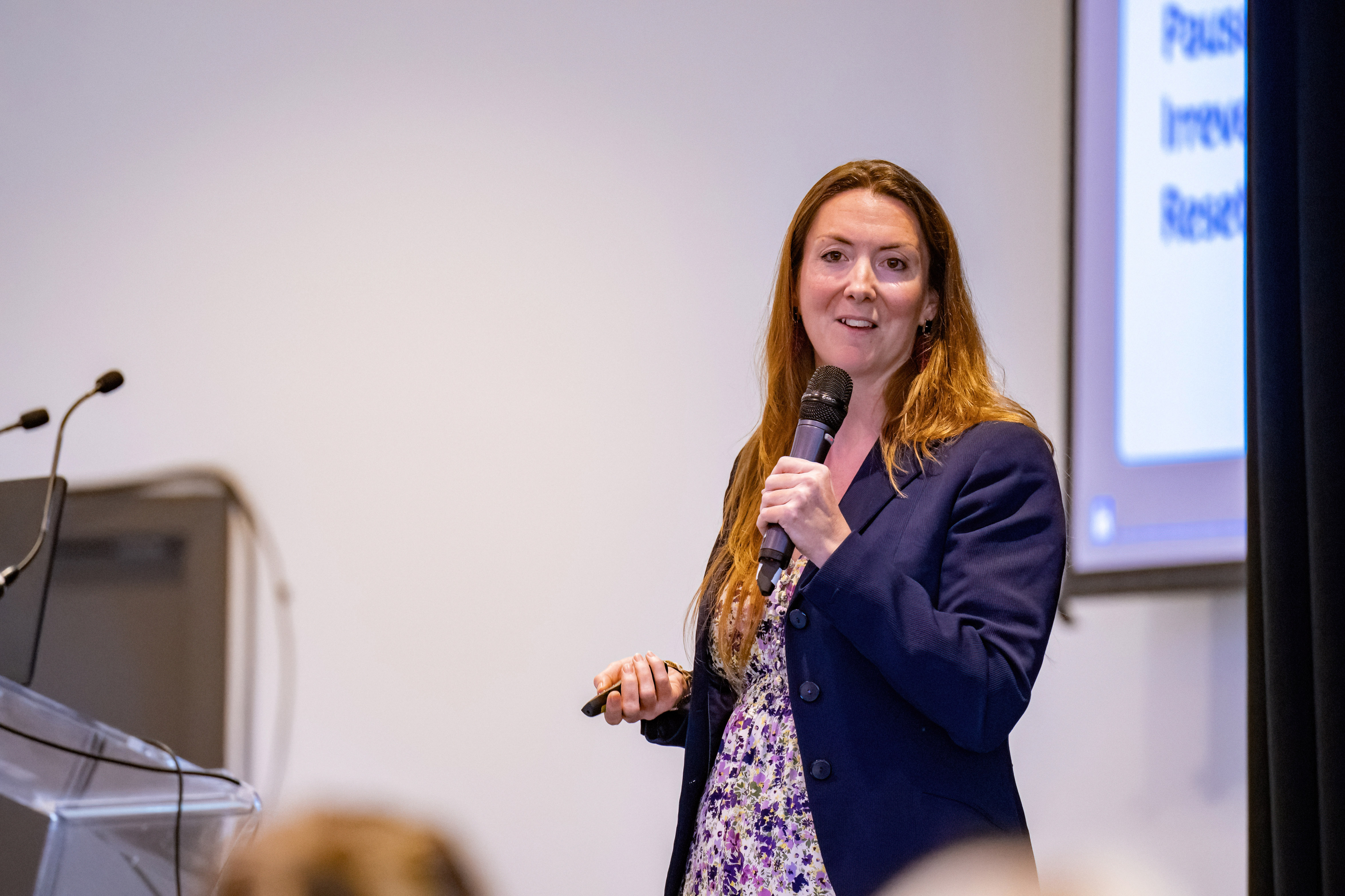
Our takeaways from Jennifer Shaw-Sweet, Global Practice Principal, B2B Institute at LinkedIn at B2B Marketing Live Manchester 2026
TLDR: LinkedIn's Jennifer Shaw-Sweet brought the data. Drawing on research from the B2B Institute, she walked through the long-term trends changing how B2B marketers should think about budgets, events, employee advocacy, AI and authenticity. The message throughout was consistent. Stop chasing shortcuts. Start building momentum.
5 Key Takeaways
1. Cutting budgets is not painless: Going dark is not a tap you can turn back on. Momentum is lost, competitors gain ground, and climbing back is harder than staying visible.
2. Events are an underused content engine: The room is the smallest part of your audience. Plan for distribution before, during and after.
3. Employee advocacy is a renewable asset: Content shared by employees gets two times the engagement. Content shared by senior staff gets four times. Your people are one of your most underleveraged channels.
4. AI is destabilising what it means to be good at work: The people most concerned about AI are not pessimists. They are high performers who have seen what it can do.
5. Authenticity is a tightrope: 92% of marketers think their content is authentic. Only 51% of consumers agree.
The Budget Conversation Nobody Wants to Have
Most marketers know the feeling. Budget season arrives, numbers are tight, and marketing is first on the chopping block.
Jennifer has a name for the disconnect. The marketing parallax. Finance looks at a paused campaign and sees a clean, reversible saving. Marketing looks at the same decision and sees something much harder to come back from.
When advertising is paused for over a year, momentum does not pause with it. Competitors gain ground. Rebuilding costs more than staying visible would have. Businesses that lean in when others go quiet can grow up to four and a half times faster.
Her advice: Triangulate the outcomes. Show finance what the trajectory looks like if you advertise, if you do not, and everything in between. As Henry Ford put it: "Stopping advertising to save money is like stopping your watch to save time."
Your Events Are Worth More Than You Think
How much of what happens at your events actually makes it beyond the room?
Jennifer made the case that most businesses are significantly underusing one of their best content assets. Events force your most senior voices onto a stage and generate content you are already confident enough to say in public.
"Events tend to attract our key people. It's a great way of getting the most senior people, the most interesting voices in your company into a room. You're forcing the chairman to stand up and give a speech. Record that speech. That's amazing content."
People who attend an event are 1.5 times more likely to engage with your marketing afterwards. Plan for distribution before, during and after. Not as an afterthought.
Your People Are a Channel You Are Not Using Enough
Content shared by employees receives two times higher engagement than content on company pages. Content shared by senior staff gets four times the engagement. And right now, very few employees are sharing regularly.
The fix is not complicated. Give people something to say and make it easy to say it.
Shaw-Sweet put it simply. Engineer the flow, systematise the drip, and measure the seep, not the splash.
AI Is Not Doing What Anyone Expected
The assumption was that AI would take over the tasks people hated and free everyone up to do better work. That is not quite what happened.
Most people tested AI on the things they were already good at. And then frightened themselves when it performed well.
The result is what she called the paradox of mastery. High performers are 25% more likely than low performers to be concerned about becoming too reliant on AI. The people getting the best results are the most worried about what those results mean for their edge.
For marketers, the opportunity is in the navigation. Help your audiences feel like they are holding the rudder, not being steered by something they do not understand.
Authenticity Is Not the Shortcut We Were Sold
The industry spent years being told to be more human. More real. More authentic.
The take? It is a lot more complicated than that.
"Authenticity has been sold to us as a shortcut to trust. The whole industry was excited about just being more humanly human. But actually what we need to see is that authenticity is far more of a tightrope in perception and how we're understood and taken."
92% of marketers think their content is authentic. Only 51% of consumers agree. That is not a small gap.
Consistency does more for trust than performing vulnerability ever will. Know what you want people to remember. Show up that way, reliably, over time. Trade transparency for coherence. And stop making it about you.
