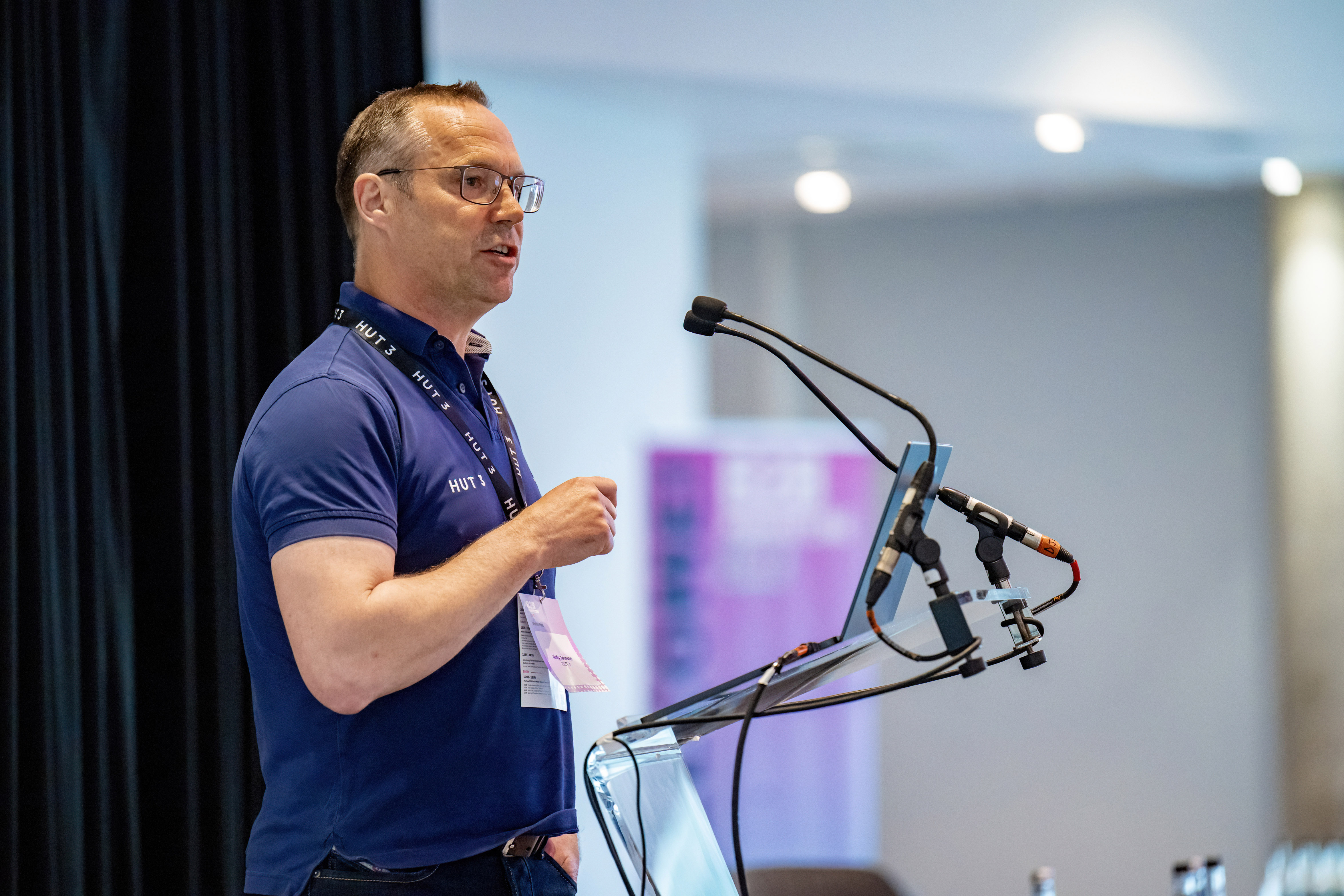
Andy Johnson, Founder and Head of Client Strategy at HUT 3, shares practical ABM frameworks and award-winning case studies
TL; DR: Andy Johnson, founder of ABM agency HUT 3, took the B2B Marketing Live Manchester stage to break down how account-based marketing wins, grows and keeps the accounts that matter most.
His big message:
Buyers now do most of their research before they ever speak to you, so ABM needs to start earlier and reach further than most teams think. He shared HUT 3's six-step ABM framework and showed how agentic AI workflows let his team run 22 campaigns on the same budget that used to cover six, all while keeping every account's content genuinely personalised.
1. The buying journey has already moved on without you
Andy opened with a stat that reframes the whole ABM conversation:
70% of B2B decisions happen before a buyer even engages with a vendor. Add in that six to ten people are typically involved in any B2B purchase, that 80% of the journey happens online, and that buyers consume 10 to 13 pieces of content before deciding, and the takeaway is clear.
ABM can't just target accounts once they're "in market." It has to build brand presence and trust long before that, or you risk losing to a competitor who got there first.
2. Think of ABM as a cake, not a funnel
Rather than one blanket strategy, HUT 3 segments accounts into layers, from broad brand-building across your whole customer and prospect base, up through demand generation, sector or role-based clusters, and finally deeply personalised one-to-one programmes for your highest-value accounts. The framework underneath is a simple six-step loop: understand needs, show up with the right content, delight through personalisation, and measure what worked so you can do more of it.
Not every account needs the top-tier treatment, but knowing which layer each one sits in stops budget being spread too thin.
3. Agentic AI is what makes personalisation scalable
Andy drew a clear line between using individual AI tools (which mostly just turns marketers into prompt engineers) and building agentic workflows that chain multiple AI tools together into a repeatable process.
HUT 3 uses this to power four connected functions: insight gathering, content "remixing" into different sector or account versions, deep personalisation, and engagement storytelling that feeds intelligence back to sales. The result, seen across several client case studies, was content that would once have taken weeks to produce, delivered in days, and campaign volume that more than tripled for one client without any increase in budget.
4. The best campaigns still start with a genuinely good idea
Behind all the tech, the standout case studies came down to strong creative thinking.
A safety-focused proposition for Volvo built around the shared idea of "safety meets safety" generated £800k in pipeline. A packaging brand's London Fashion Week campaign, built on AI-generated brand ambassadors, went on to win an industry award. The AI accelerated production and personalisation, but it didn't replace the strategic and creative thinking that made each campaign land.
Watch the full session: