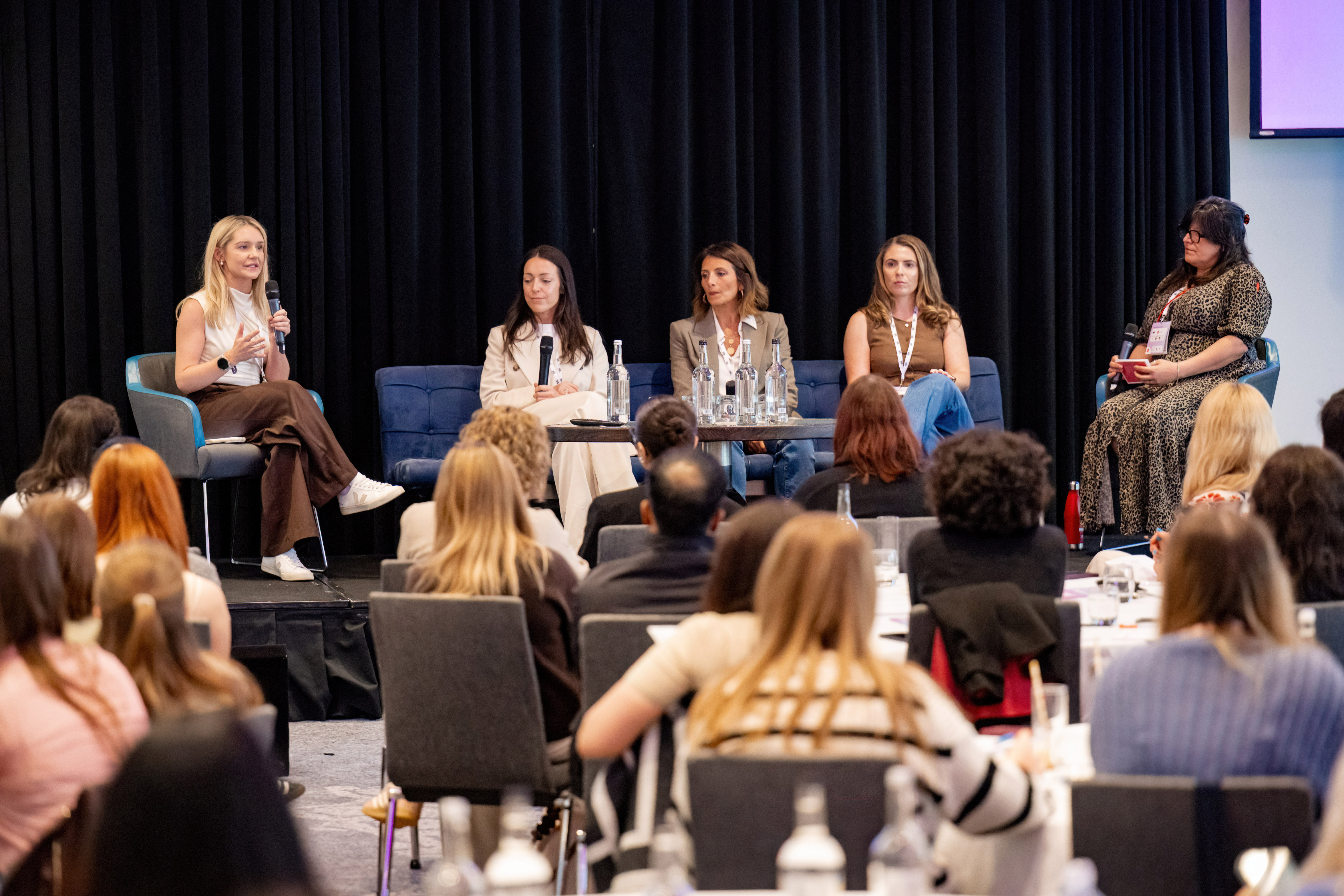
Brand vs Demand: What we learned from the panel at B2B Marketing Live Manchester 2026 Panel: Kate Brown (The Creative Club, chair), Olivia Wallbank (Sky Business), Shauna Brett (B&Q Marketplace), Kinda Jackson (Brands2Life), Fiona Robinson (Print.com)
TL;DR: Chaired by Kate Brown, this panel brought together senior marketers from Sky Business, B&Q Marketplace, Brands2Life and Print.com to tackle one of marketing's oldest tensions: brand versus demand. Budget splits varied hugely across the panel, but the conversation kept landing in the same place.
Buyers are changing, the path to purchase is longer and more fragmented than ever, and chasing short-term leads without investing in trust eventually runs out of road.
4 Key Takeaways
- There is no universal right split: Budget allocation should follow business objectives, not convention, and it will look completely different depending on where a brand is at.
- Buyers have changed, so brand can't be skipped: With most B2B buyers now millennial or Gen Z, brand awareness can no longer be assumed. It has to be earned before demand activity even starts.
- Advocacy builds trust faster than channels do: Employees, creators and genuine brand advocates consistently outperform generic brand messaging, whatever the format.
- AI is changing execution, not the fundamentals: AI is freeing up time and creative capacity, but the core strategic questions marketers need to answer haven't moved.
Budget Is Not One-Size-Fits-All
Ask five marketers what their brand-to-demand split should be and you'll get five different answers, and that's exactly what happened on this panel.
Sky Business runs close to 65% brand and 35% activation, reflecting a strong existing brand with room to grow awareness of a specific business division. B&Q Marketplace sits almost in reverse, around 80% demand and 20% brand, driven by hard merchant acquisition targets.
Neither is wrong. The panel's shared view was that the split has to be reassessed continuously against what the business is actually trying to achieve, particularly as companies expand into new markets where brand recognition can no longer be taken for granted.
The Buying Journey Has Already Started Without You
One stat cut through the room: 85% of B2B buyers are now millennials or Gen Z. Many of them are not aware of your brand, even if you assume they are.
The buying journey now stretches to around 272 days, with roughly 88 touchpoints and 10 stakeholders involved. And critically, 92% of buyers ultimately purchase from their "day one consideration list."
Getting onto that list means the brand work has to happen long before a lead ever reaches a sales team. Demand generation without prior brand investment is, in effect, fishing in a pond buyers never knew existed.
Real People Still Beat Brand Pages
Across every format discussed, from LinkedIn to print, the panel returned to the same idea: content from real people builds trust faster than content from a company page.
Employees, creators and genuine advocates were repeatedly named as the most effective route into younger, more skeptical buyers, particularly through short-form video and individual thought leadership. Even in physical formats, print was flagged as still highly effective, with panellists sharing examples of direct mail prompting action months after it landed, simply because the brand stayed present in someone's mind until the moment they needed it.
AI Changes How You Work, Not What You're Solving For
The panel agreed AI is removing costly, repetitive work and giving smaller marketing teams the ability to compete with much bigger ones on creative output.
What it hasn't changed is the strategy underneath. Who are you targeting? What problem are you solving for them? How do you build enough trust that they choose you? Those questions are exactly the same as they were before AI arrived.
What has shifted is where discovery happens. With buyers increasingly using AI tools to research brands, the panel pointed to individual LinkedIn presence, rather than company pages, as one of the clearest ways to show up in the answers those tools are generating.